
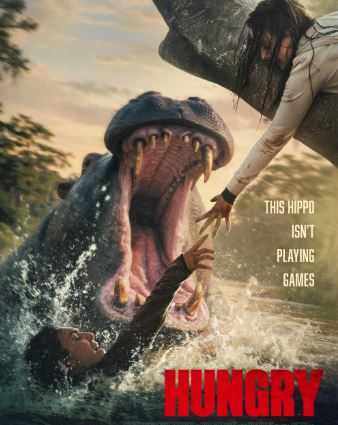
Hungry (2026) is a survival horror that merges the natural horrors of the Louisiana swamplands with the primal menace of one of nature’s most fearsome creatures, the hippopotamus. The movie starts out as a simple adventure, as a party of vacationers takes a riverboat ride, but quickly gives way to a tense, visceral struggle for survival against a roaring monster. The swampy environment is suitably creepy and desolate, and the film’s runtime builds throughout to a heightened sense of fear and chaos as the hippo’s attacks become more intense and relentless.
It’s the combination of practical horror and emotional stakes that make “Hungry” so compelling. These characters are well developed—the tragedy of Tim, Hannah, and Rodrigo gives emotional depth to their fight for survival in the midst of the terror and Sistine’s own struggles. Themes of resilience, sacrifice and a protective instinct towards vulnerable life are explored in the film, particularly in the final scene, when Sistine decides to release the baby hippo rather than destroy it, knowing that it is not evil but protective. The haunting is also enhanced by the deftly deployed swamp ground and characters’ ingenuity, so that there’s a sense of reality and immediacy to the dread.
Though there is some familiar survival tropes, “Hungry” has a unique focus on hippos as predators and on the history of their farming. Overall, the film is visually engaging and emotionally compelling, offering a powerful and memorable experience that will leave a lasting impression on anyone who watches. A riveting and troubling journey which highlights the deadly speed of the wild when pushed to the limit.